Several months ago I wrote about my experiences as a new Android user followed a few months later by my experiences installing custom versions of the OS. Yesterday, Apple finally announced a new iPhone, which is a big speed boost from the iPhone 4, running on essentially the same hardware as the iPad 2. Next week, Google and Samsung are expected to announced the next version of Android, Ice Cream Sandwich, along with a new Nexus phone. I'll be watching very closely.
After five months with Android, I'm kind of fed up with it. Is it because I'm used to iOS? Very possibly, but I will also assign some blame to the phone itself. The T-Mobile LG G2x turned out to be something of a dud. Even with custom software installed, it still feels considerably slower my iPad with what should be roughly equivalent hardware (dual-core 1 GHz processor, 512 MB RAM, Tegra 2 GPU). As it turns out, Google has refused to include GPU acceleration in the OS. (That link also explains the benefits.) This may seem like a minor issue, however, two of their competitors in this arena, Apple and Microsoft, included it in their phone OSes, and the difference in smoothness is incredible. The iPhone 4, an 18 month old phone, despite having a single core processor reportedly clocked around 800 MHz, still feels like a faster phone than almost anything with Android barring maybe some of the most recent releases like the Samsung Galaxy S II, and Samsung supposedly includes GPU acceleration in Touchwiz, their custom interface (I believe certain versions of Motorola's Blur have it, as well). It seems like a small issue, but it's a huge difference in usability. A day doesn't go by that my phone seems to miss a tap to its touchscreen or lags when I try to do something or seems to simply freeze for seconds at a time - issues I never had with my two year old iPhone 3GS. That doesn't even get into concerns that aren't about usability, but do show a lack of polish, such as non-smooth zooming, choppiness while scrolling, and so on. It gets really choppy in areas with bad "4G" reception, since it starts to switch between that and 2G which seems to eat a bunch of CPU cycles (and battery). Sure, it can be easily forced to use 2G only, but that's not much of a solution, though it's thankfully rarely a problem (and not one I'm willing to switch providers over). I've also recently been running into an issue of the phone having trouble reconnecting to Google's server after losing connection. This shouldn't be a big deal, except that I use Google Voice for text messaging, and without a connection to Google's servers, I don't have texts. (Well, not explicitly true. I can still send them through T-Mobile, but then I have to use my phone's actual number, which not a lot of people have.)
It's not all bad. Things like home screen widgets are a great feature, and the sheer number of customization options is amazing. I'm going to see what Google has to offer next week, then probably switch phones to something else. I'm really interested in Windows Phone 7, but I'm not sure I want to drop the cash on it. We'll see.
Wednesday, October 5, 2011

Wednesday, August 31, 2011
Deus Ex: Human Revolution
Deus Ex: Human Revolution came out a week or so ago to XBox360, PS3, and PC. Being lazy, I decided to download it off Steam after hearing a handful of positive reviews from people I largely trust. Buying a new PC game is something I rarely do, so I was worried I wouldn't be interested, especially since it takes place in first person. There's been VERY few games I've really enjoyed that are first person, and none have been shooters, which this game appears to approach much more than the others (those being Portal and Portal 2, a pair of wonderful puzzle games, and Mirror's Edge, a deeply flawed, but gorgeous and fun first person action game). Also as a disclaimer, I haven't played the original or its much-hated sequel, so I can't make any comparisons to those.
After the download was completed, I started playing, and pretty much didn't stop for another six hours. That's something I haven't done in ages. I tweeted that it's the most into a game I've been since Mass Effect 2, and that's accurate. The comparison is actually pretty appropriate too: they're both story-driven western RPGs, they both have a cover-based shooting mechanic (ME2 being in third person), and they both have a science fiction feel. They're not identical by any stretch, of course. ME2 is set in the far future and follows a story with consequences that affect the entire galaxy. Deus Ex, by contrast, is a much more intimate cyberpunk story set in 2027 with consequences that might affect a single, fledgling company. You play as Adam Jensen, the head of security for biotech company that's developed a number of cybernetic augmentations, a fairly new industry that's under attack from all sides. After an attack on the company, Jensen is put through a series of surgeries and given a number of augmentations to save his life, which is where the story really begins (the attack serves as a short combat tutorial for the most part).
At this point, you're dropped into the actual game. The world of 2027 is dirty, grimy and shows an obvious class separation that would makes today look like we're all on an even footing. Augmented humans have a large amount of prejudice against them, derogatorily called "augs," with a number of groups trying to get augmentation banned and a growing "pure human" movement. So far, the game has taken me to two locations, both of which are about as described. You're dropped into an environment with a mission to carry out, but without much in the way of a time limit, so exploration is rewarded with some experience points, and loot (guns, ammo, upgrade points, etc.), and talking to the right people can trigger side missions away from the main ones.
Combat occurs every so often, but the game seems to push you towards a more stealthy approach: nonlethal methods of taking down enemies give bonus experience, and there's an achievement for completing the game without killing any non-boss enemies (bosses have to be killed, in one of the most common complaints), as well as one for not triggering any alarms. The fights are pretty typical cover-shooter fights, although the enemy AI is not the best. Basically, enemies in the area will move towards you, and that's about as complex as it gets. Which is fine, and it may be intentional to push players to the stealthy approach. Between combat sequences, there's often parts that require talking to characters to gather information or just get something done. These often require remembering what you've seen and done recently, and certain augments can make this a lot easier. One gives you the option to release pheromones to influence other characters. I usually try to do without just for the added challenge. Conversation trees are somewhat like Mass Effect, but there's no morality component to it, and they only seem to directly affect the conversation you're in.
Graphically, it's not the best game I've seen, but not the worst either. Character models are unique and interestingly designed. Facial animations are pretty good, although not always synced with the voice acting. Speaking of which, it's all over the place. Jensen speaks with a low, gravelly voice that rarely conveys any emotion. It fits with the tone of the game, and is well-voiced, but I'm still not sure it was the best choice. Other characters aren't so good. It's clear that many of the voice actors, if nothing else, don't speak English as much as French (it was developed in Montreal, Canada) and sometimes inflections are off as a result. Still, it's good enough.
All in all, I'm loving the game, and have been playing it as much as I can find time for. I totally recommend it, especially to those who prefer slower games to twitch action games.
After the download was completed, I started playing, and pretty much didn't stop for another six hours. That's something I haven't done in ages. I tweeted that it's the most into a game I've been since Mass Effect 2, and that's accurate. The comparison is actually pretty appropriate too: they're both story-driven western RPGs, they both have a cover-based shooting mechanic (ME2 being in third person), and they both have a science fiction feel. They're not identical by any stretch, of course. ME2 is set in the far future and follows a story with consequences that affect the entire galaxy. Deus Ex, by contrast, is a much more intimate cyberpunk story set in 2027 with consequences that might affect a single, fledgling company. You play as Adam Jensen, the head of security for biotech company that's developed a number of cybernetic augmentations, a fairly new industry that's under attack from all sides. After an attack on the company, Jensen is put through a series of surgeries and given a number of augmentations to save his life, which is where the story really begins (the attack serves as a short combat tutorial for the most part).
At this point, you're dropped into the actual game. The world of 2027 is dirty, grimy and shows an obvious class separation that would makes today look like we're all on an even footing. Augmented humans have a large amount of prejudice against them, derogatorily called "augs," with a number of groups trying to get augmentation banned and a growing "pure human" movement. So far, the game has taken me to two locations, both of which are about as described. You're dropped into an environment with a mission to carry out, but without much in the way of a time limit, so exploration is rewarded with some experience points, and loot (guns, ammo, upgrade points, etc.), and talking to the right people can trigger side missions away from the main ones.
Combat occurs every so often, but the game seems to push you towards a more stealthy approach: nonlethal methods of taking down enemies give bonus experience, and there's an achievement for completing the game without killing any non-boss enemies (bosses have to be killed, in one of the most common complaints), as well as one for not triggering any alarms. The fights are pretty typical cover-shooter fights, although the enemy AI is not the best. Basically, enemies in the area will move towards you, and that's about as complex as it gets. Which is fine, and it may be intentional to push players to the stealthy approach. Between combat sequences, there's often parts that require talking to characters to gather information or just get something done. These often require remembering what you've seen and done recently, and certain augments can make this a lot easier. One gives you the option to release pheromones to influence other characters. I usually try to do without just for the added challenge. Conversation trees are somewhat like Mass Effect, but there's no morality component to it, and they only seem to directly affect the conversation you're in.
Graphically, it's not the best game I've seen, but not the worst either. Character models are unique and interestingly designed. Facial animations are pretty good, although not always synced with the voice acting. Speaking of which, it's all over the place. Jensen speaks with a low, gravelly voice that rarely conveys any emotion. It fits with the tone of the game, and is well-voiced, but I'm still not sure it was the best choice. Other characters aren't so good. It's clear that many of the voice actors, if nothing else, don't speak English as much as French (it was developed in Montreal, Canada) and sometimes inflections are off as a result. Still, it's good enough.
All in all, I'm loving the game, and have been playing it as much as I can find time for. I totally recommend it, especially to those who prefer slower games to twitch action games.
Wednesday, August 3, 2011
Why I won't be playing Diablo III
In the past couple days, Blizzard announced a few things about their upcoming sure-to-be megahit Diablo III. The two that stood out are the creation of a real money auction house for selling in-game loot, and that playing the game will require an always-on internet connection, even when playing single player. The former isn't a particularly big deal to me. Having played previous installments of the series, I don't really care if some random dude has way better gear than me. I don't really play PvP stuff, so if it means he's killing more stuff than me, it's not a big deal. On top of that, I'd mostly be playing with friends, so it's even less of an issue, unless they decide to make cash-only items that affect gameplay, but I don't see that happening. (Cash-only items that don't do anything, well, that will almost certainly happen if World of Warcraft is followed.
The second, however, is a major problem. Not as a practical concern - my internet connection is quite stable - but as an ideological one. I'm not a fan of DRM, in general, but I'm okay with it if it's unobtrusive. Valve's Steam system is a pretty good example. You can't take your games away from Steam, but that's all the built-in DRM. Publishers can add their own to games on Steam, however, which can be annoying, but is generally not much more than a serial number. Requiring an always-on connection means that any time it goes out, even briefly, your game ends. It means you can't put it on a laptop and play on an airplane. I'm not totally against DRM, but I can understand the reasoning from publishers. This is just too far, and I won't support any game that does it (provided it's not an online multiplayer game, but I think that's obvious). Maybe there's more to it. Maybe people can just randomly join your game, and there's really no such thing as a "single-player" game in this. If that's the case, I'll reconsider, but probably won't change my mind. It's unfortunate, but I hope more people do the same.
The second, however, is a major problem. Not as a practical concern - my internet connection is quite stable - but as an ideological one. I'm not a fan of DRM, in general, but I'm okay with it if it's unobtrusive. Valve's Steam system is a pretty good example. You can't take your games away from Steam, but that's all the built-in DRM. Publishers can add their own to games on Steam, however, which can be annoying, but is generally not much more than a serial number. Requiring an always-on connection means that any time it goes out, even briefly, your game ends. It means you can't put it on a laptop and play on an airplane. I'm not totally against DRM, but I can understand the reasoning from publishers. This is just too far, and I won't support any game that does it (provided it's not an online multiplayer game, but I think that's obvious). Maybe there's more to it. Maybe people can just randomly join your game, and there's really no such thing as a "single-player" game in this. If that's the case, I'll reconsider, but probably won't change my mind. It's unfortunate, but I hope more people do the same.
Monday, August 1, 2011
From Dust and Zelda: The Ocarina of Time 3D
When last I talked games, I missed a big one: Zelda: The Ocarina of Time 3D, for the Nintendo 3DS, somewhat obviously. This is one of my big gaming confessions: I've never played OoT all the way through. In fact, the only Zelda games I've completed are Twilight Princess (Wii) and Link's Awakening (Game Boy). So I was kind of excited to see OoT come to the 3DS in a somewhat changed manner. While it still largely looks like a Nintendo 64 game, side-by-side image comparisons show that it's pretty significantly improved. It's still far from modern-looking, but it looks a lot better, and really, I'm not playing games on a 3" screen for their graphics. What I'm playing it for is the actual game itself, and having played games that aren't 16 years old, it definitely feels like it is. Controls aren't quite as tight as more modern games, and it has some mechanics that seem really strange in light of more current games. Nothing game-breaking or even particularly difficult, but still somewhat annoying. On the plus side, it's not like the DS Zelda games where everything is controlled by the touchscreen. I can't really make a recommendation here, since anyone who's played the game knows what it is, and anyone who hasn't is probably still aware that it's consistently lauded as not just one of the best in its series (or the best, depending on who you ask - though its only major competitor is the SNES's Link to the Past), but possibly one of the best games of all time. I think 16 years of love says far more than I can on the matter, but just beware that it's a 16 year old game, and wears that on its shoulder.
On the newer side of things, I also downloaded From Dust on XBox Live Arcade, the second of Microsoft's Summer of Arcade selections. From Dust plays somewhat like the old PC game, Populous. You play as a god, I suppose, leading a group of villagers from map to map by creating pathways for them to move around the map. They can't cross water or lava, so the puzzles often involve transporting soil from one area to another to create a land bridge. You also gain more powers as the story goes on - things like the ability to move more stuff at a time or evaporate a large amount of water on the map for a short period of time. So far it's been okay, but I'm not sure I can say I really love it. It's not been terribly difficult and I appear to be more than halfway through the story (assuming the map it shows of the various lands is accurate) despite barely playing it. I'd check out the demo and go from there.
On the newer side of things, I also downloaded From Dust on XBox Live Arcade, the second of Microsoft's Summer of Arcade selections. From Dust plays somewhat like the old PC game, Populous. You play as a god, I suppose, leading a group of villagers from map to map by creating pathways for them to move around the map. They can't cross water or lava, so the puzzles often involve transporting soil from one area to another to create a land bridge. You also gain more powers as the story goes on - things like the ability to move more stuff at a time or evaporate a large amount of water on the map for a short period of time. So far it's been okay, but I'm not sure I can say I really love it. It's not been terribly difficult and I appear to be more than halfway through the story (assuming the map it shows of the various lands is accurate) despite barely playing it. I'd check out the demo and go from there.
Thursday, July 28, 2011
3DS Ambassador!
As of last night, Nintendo has deemed me fit to be a 3DS Ambassador! What does one have to do to get into this elite club? Why, simply purchase a 3DS before the $80 price drop! Wait, that's not a good thing at all.
Due to sluggish sales, Nintendo has dropped the price of the 3DS by $80 to $170 (which is well worth it, honestly) after about six months of sales. It's unfortunate they had to do it, but I think it was completely expected with Sony announcing the PS Vita at the same $250 price point. $80 was more than I would have expected, however. At any rate, anyone who accesses the 3DS eStore before some date I forget is automatically made a "3DS Ambassador" and will eventually get 10 NES and 10 GBA games to download to their 3DS. Nintendo hasn't released the full list, but what they have (although the language suggests that it might be subject to change) looks like some quality, albeit a lot of stuff I've already played. It's a nice gesture, and one they didn't have to make, so I'm glad they're doing it. Still, I think I'd have rather saved the $80...
Due to sluggish sales, Nintendo has dropped the price of the 3DS by $80 to $170 (which is well worth it, honestly) after about six months of sales. It's unfortunate they had to do it, but I think it was completely expected with Sony announcing the PS Vita at the same $250 price point. $80 was more than I would have expected, however. At any rate, anyone who accesses the 3DS eStore before some date I forget is automatically made a "3DS Ambassador" and will eventually get 10 NES and 10 GBA games to download to their 3DS. Nintendo hasn't released the full list, but what they have (although the language suggests that it might be subject to change) looks like some quality, albeit a lot of stuff I've already played. It's a nice gesture, and one they didn't have to make, so I'm glad they're doing it. Still, I think I'd have rather saved the $80...
Tuesday, July 26, 2011
On the playlist
It's been awhile since I've talked about games. Part of it is that I'm not sure what I have to say it particularly interesting or new. The other part is that I haven't really been in the mood to write much of anything. The final part is that I don't think I've played anything really substantial in awhile. So here's a bit of an update.
Ms. Splosion Man
As the title would suggest with its slight reference to Ms. Pac-Man (whose only difference, as we all know, is that she has a bow on her head), Ms. Splosion Man is the sequel to developer Twisted Pixel's 2009 game, Splosion Man, which was something I loved the hell out of when it came out, playing through the single player, and getting through most of multiplayer over the course of a couple days staying with a friend in Orlando on vacation. All that said, so far, Ms. hasn't quite captured me as much. It starts off much harder than the first game, which, while not that big a deal, can be a bit frustrating at times. There's some new gameplay features that I'm not sure were really playtested particularly well, or if Twisted Pixel ever stopped and asked "Is this fun?" As an example, within the first couple levels, you're put on a sequence of jumping from flying car to flying car, with a fall being fatal. It's not terribly difficult, but Twisted Pixel put so much work into animating the backgrounds and camera changes, that it can sometimes be difficult to tell where you are and what you're able to actually jump on. Ms. Splosion Man is, essentially, a pink stick figure, and every time you explode, she gets obscured in the blast. Combine that with controls that are maybe not quite as precision as one would like (and I'll grant that blowing up maybe shouldn't be easily controllable), and there's cases where sections are a lot harder than they really ought to be. Not that I'm complaining too much. I do really like the game, but it has some flaws that were either not apparent or simply not there in its predecessor. Twisted Pixel has also included several unlockable full motion videos, as seems to be their trademark gimmick, including an intro video for their proprietary BEARD engine. I'd recommend anyone interested to check out the first game first. It should be cheaper, if nothing else. Both are available on XBox Live Arcade.
Bastion
Another downloadable title, Bastion is an action RPG with some interesting gimmicks. For one, the whole game is narrated by another character, often with a dose of humor. If you start breaking everything in sight, the narrator says something along the line of "The Kid spent some time just raging at the world," but nothing repeats as far as I can tell, thankfully. The game world sort of grows around The Kid as he walks around. A level might start on a single platform, from which you walk to a path that flies up from below (you can fall of edges pretty easily). The art is all 2D sprites, done in an anime-inspired style, but with a very attractive watercolor aesthetic. The music that plays throughout is similarly really, really nice, and the narrator's voicework is really great (which is a good thing, since bad voicework would kill this game). All that said, it's been really repetitive so far. I'm not sure how much more I'm going to stick with it.
Child of Eden
This is the Kinect game I was waiting for. Child of Eden is the "spiritual" sequel to 2001 Dreamcast game Rez, one of my all-time favorite games. I put spiritual sequel in quotes, because there's no doubt that this is a story sequel, for what little story actually meant in Rez. The gameplay is similar, but not identical. Rez only offered a single way of attacking enemies (well, okay, two if you count the special weapon thing): target them, then release to fire. You could tap to attack, but it didn't make much difference either way. Child has this method, as well as another rapid fire attack that works better on some enemies than others. As I implied above, I got a Kinect for this. Rather than use a controller to move a reticule, playing with Kinect has you move each arm for each weapon, but only one at a time. I'm not really sold on the thing just yet. It seems to have trouble discerning one hand from the other sometimes, and it doesn't seem to add a whole lot to the game. It does turn down the difficulty, I am told. I haven't actually played more than the first level, but I'm trying to take it slow, since I know it's going to be a short game. And gosh is it pretty.
Ms. Splosion Man
As the title would suggest with its slight reference to Ms. Pac-Man (whose only difference, as we all know, is that she has a bow on her head), Ms. Splosion Man is the sequel to developer Twisted Pixel's 2009 game, Splosion Man, which was something I loved the hell out of when it came out, playing through the single player, and getting through most of multiplayer over the course of a couple days staying with a friend in Orlando on vacation. All that said, so far, Ms. hasn't quite captured me as much. It starts off much harder than the first game, which, while not that big a deal, can be a bit frustrating at times. There's some new gameplay features that I'm not sure were really playtested particularly well, or if Twisted Pixel ever stopped and asked "Is this fun?" As an example, within the first couple levels, you're put on a sequence of jumping from flying car to flying car, with a fall being fatal. It's not terribly difficult, but Twisted Pixel put so much work into animating the backgrounds and camera changes, that it can sometimes be difficult to tell where you are and what you're able to actually jump on. Ms. Splosion Man is, essentially, a pink stick figure, and every time you explode, she gets obscured in the blast. Combine that with controls that are maybe not quite as precision as one would like (and I'll grant that blowing up maybe shouldn't be easily controllable), and there's cases where sections are a lot harder than they really ought to be. Not that I'm complaining too much. I do really like the game, but it has some flaws that were either not apparent or simply not there in its predecessor. Twisted Pixel has also included several unlockable full motion videos, as seems to be their trademark gimmick, including an intro video for their proprietary BEARD engine. I'd recommend anyone interested to check out the first game first. It should be cheaper, if nothing else. Both are available on XBox Live Arcade.
Bastion
Another downloadable title, Bastion is an action RPG with some interesting gimmicks. For one, the whole game is narrated by another character, often with a dose of humor. If you start breaking everything in sight, the narrator says something along the line of "The Kid spent some time just raging at the world," but nothing repeats as far as I can tell, thankfully. The game world sort of grows around The Kid as he walks around. A level might start on a single platform, from which you walk to a path that flies up from below (you can fall of edges pretty easily). The art is all 2D sprites, done in an anime-inspired style, but with a very attractive watercolor aesthetic. The music that plays throughout is similarly really, really nice, and the narrator's voicework is really great (which is a good thing, since bad voicework would kill this game). All that said, it's been really repetitive so far. I'm not sure how much more I'm going to stick with it.
Child of Eden
This is the Kinect game I was waiting for. Child of Eden is the "spiritual" sequel to 2001 Dreamcast game Rez, one of my all-time favorite games. I put spiritual sequel in quotes, because there's no doubt that this is a story sequel, for what little story actually meant in Rez. The gameplay is similar, but not identical. Rez only offered a single way of attacking enemies (well, okay, two if you count the special weapon thing): target them, then release to fire. You could tap to attack, but it didn't make much difference either way. Child has this method, as well as another rapid fire attack that works better on some enemies than others. As I implied above, I got a Kinect for this. Rather than use a controller to move a reticule, playing with Kinect has you move each arm for each weapon, but only one at a time. I'm not really sold on the thing just yet. It seems to have trouble discerning one hand from the other sometimes, and it doesn't seem to add a whole lot to the game. It does turn down the difficulty, I am told. I haven't actually played more than the first level, but I'm trying to take it slow, since I know it's going to be a short game. And gosh is it pretty.
Monday, July 25, 2011
Adventures in custom Android ROMs
One of the nice things about Android is that it's open source, meaning developers can take Google or the phone manufacturer's code, hack it however they want, compile, and install on their phones. And if they're nice, share it with the rest of the world. Depending on the phone, this can range anywhere from simple (the Google Nexus phones) to impossible (any of a number of locked-down phones). The LG T-Mobile G2x falls on the latter side of that, requiring a couple simple tools to get it rooted and ready to install a new OS. Doing so requires wiping everything, but there's, again, tools to back everything up.
From there, it's a matter of finding and installing a custom ROM. The major repository for these is xda-developers.com, a huge forum of hackers working on dozens of phones from every major manufacturer, though more popular phones might have their own sites set up just for them. Naturally, not every ROM is going to be the same, but they generally offer improvements in speed, stability, and battery life over the shipped OS (at the cost of some convenience with updates, as well as voiding the phone's warranty, although in most cases, it's easy enough to return it to a state where it's impossible to tell it's been hacked). I find it kind of hilarious that this is the case, considering these are unpaid hackers doing it for fun, more or less. One or two of the major ROMs might make enough to live on, but that's about it. Most phones have many to choose from, although many of them, but a good number of those start with just one: CyanogenMod. From what I've gathered, the lead developer of the project, hacker-alias Cyanogen started on the original HTC G1 and has been working on the Android OS ever since, across a number of phones, and has recruited a number of other developers to work on phones he doesn't personally own. One such phone is mine, the G2x. It doesn't have a stable release yet, but I've been running the nightly builds since the early teens without many issues, and it continues to get better, currently at #89, though I think once a stable release is out (which might be sooner rather than later, since a release client was released a week or so ago), I'm just going to stop there.
CyanogenMod 7, the current version is based on Android 2.3.4, the most current release from Google. From there, the team makes a number of under-the-hood changes to the OS, as well as adding some rather nice features such as a "powerbar" (toggle switches for various things such as wifi, the LED, and so on) to the notification pull-down, "phone goggles" (set your phone to not let you call or text people after a certain time without solving math problems - yes, this is for those drunk dialers out there), as well as a whole host of new settings to further tweak the system to one's liking. Most importantly, it made my phone seem noticeably faster over stock. They've managed to keep the useful T-Mobile apps like wifi calling and visual voicemail as part of the OS, as well. All in all, it seems like a significant improvement over what was originally on the phone, even if it takes a bit more to manage it (I update maybe once a week, which takes about a half hour total).
Besides CM7, I briefly tried out Eaglesblood, which touts itself as the fastest ROM available. It seemed very snappy, but it had a pretty big issue in that it wouldn't properly mount my SD card when connected to my computer. I may have fixed that when CM7 started doing the same thing, but at this point, I'm not sure I want to bother wiping everything and starting over, even with backups all taken care of. I am, however, looking forward to the upcoming MIUI release for my phone, which looks like it goes in a completely different direction for Android. It looks almost like iOS, which isn't a bad thing in my book. But that doesn't have a set release, so we'll see when it comes around.
On Android, in general, I'm not 100% sure I'm sold yet, and this is multiple months down the line. It's still nowhere near as polished as iOS, and Google seems more intent on adding every feature they can think of than cleaning up what they have. Not that that's necessarily a bad thing, but it's definitely a very Google way of thinking. I'm curious to see what they do with Ice Cream Sandwich, and I may snag whatever the next Nexus phone is, since that line is the purest Google experience possible. We'll see. I may just go back to an iPhone if for no reason other than that Android phones seem to be getting bigger and bigger, which is exactly not what I want.
From there, it's a matter of finding and installing a custom ROM. The major repository for these is xda-developers.com, a huge forum of hackers working on dozens of phones from every major manufacturer, though more popular phones might have their own sites set up just for them. Naturally, not every ROM is going to be the same, but they generally offer improvements in speed, stability, and battery life over the shipped OS (at the cost of some convenience with updates, as well as voiding the phone's warranty, although in most cases, it's easy enough to return it to a state where it's impossible to tell it's been hacked). I find it kind of hilarious that this is the case, considering these are unpaid hackers doing it for fun, more or less. One or two of the major ROMs might make enough to live on, but that's about it. Most phones have many to choose from, although many of them, but a good number of those start with just one: CyanogenMod. From what I've gathered, the lead developer of the project, hacker-alias Cyanogen started on the original HTC G1 and has been working on the Android OS ever since, across a number of phones, and has recruited a number of other developers to work on phones he doesn't personally own. One such phone is mine, the G2x. It doesn't have a stable release yet, but I've been running the nightly builds since the early teens without many issues, and it continues to get better, currently at #89, though I think once a stable release is out (which might be sooner rather than later, since a release client was released a week or so ago), I'm just going to stop there.
CyanogenMod 7, the current version is based on Android 2.3.4, the most current release from Google. From there, the team makes a number of under-the-hood changes to the OS, as well as adding some rather nice features such as a "powerbar" (toggle switches for various things such as wifi, the LED, and so on) to the notification pull-down, "phone goggles" (set your phone to not let you call or text people after a certain time without solving math problems - yes, this is for those drunk dialers out there), as well as a whole host of new settings to further tweak the system to one's liking. Most importantly, it made my phone seem noticeably faster over stock. They've managed to keep the useful T-Mobile apps like wifi calling and visual voicemail as part of the OS, as well. All in all, it seems like a significant improvement over what was originally on the phone, even if it takes a bit more to manage it (I update maybe once a week, which takes about a half hour total).
Besides CM7, I briefly tried out Eaglesblood, which touts itself as the fastest ROM available. It seemed very snappy, but it had a pretty big issue in that it wouldn't properly mount my SD card when connected to my computer. I may have fixed that when CM7 started doing the same thing, but at this point, I'm not sure I want to bother wiping everything and starting over, even with backups all taken care of. I am, however, looking forward to the upcoming MIUI release for my phone, which looks like it goes in a completely different direction for Android. It looks almost like iOS, which isn't a bad thing in my book. But that doesn't have a set release, so we'll see when it comes around.
On Android, in general, I'm not 100% sure I'm sold yet, and this is multiple months down the line. It's still nowhere near as polished as iOS, and Google seems more intent on adding every feature they can think of than cleaning up what they have. Not that that's necessarily a bad thing, but it's definitely a very Google way of thinking. I'm curious to see what they do with Ice Cream Sandwich, and I may snag whatever the next Nexus phone is, since that line is the purest Google experience possible. We'll see. I may just go back to an iPhone if for no reason other than that Android phones seem to be getting bigger and bigger, which is exactly not what I want.
Thursday, April 28, 2011
Let's talk Android
For the past several years, I've been an iPhone user. I got the original after it dropped in price, then got a 3GS when it launched. That makes it nearly two years old at this point, and it was showing, especially since the 4.3 update. As far as my AT&T contract went, I was at the point where the early termination fee would cost me less than an extra two months of service, so I started looking into phones. All rumors were pointing to a fall release of a new iPhone, and I'm not really willing to wait, so Android was the obvious choice. The immediate concern was getting out of the Apple ecosystem, which wasn't such a big deal since I have an iPad. I don't carry it around, but at least all my apps can still be used. (I've purchased very few songs through iTunes, and what I have is DRM-free, so that's essentially irrelevant.)
Looking into Android phones, I had a few desires: 1) stock or as close to stock Android as possible, 2) good developer support, 3) easily rooted, 4) physically not a whole lot bigger than the iPhone, and 5) not AT&T (AT&T has limited marketplace access amongst other annoyances - as a result, T-Mobile was similarly less interesting). In order, 1 has a handful of choices, all of which are part of 2 which covers a pretty wide variety of handsets, 3 knocks out Motorola and upcoming HTC phones, 4 kicks out basically anything with bigger than 4" screen, and 5 wasn't a huge issue.
The immediately obvious choice seemed to be the Nexus S, and slightly better, the upcoming Nexus S 4G. The problem with the former was T-Mobile, which is looking like I'll end up on AT&T in the future, while the latter is on Sprint, whose coverage is not terribly good nationwide (albeit perfectly fine here in the DC area). The 4G is also going to be $200 on contract, essentially making it the price of a brand new phone despite the fact that it's essentially a year old, being more or less a Samsung Galaxy S. The Nexus line is the phones Google designs itself, but manufactured by one of the major partners, and is intended to have the most up to date software. For reference, Android 2.3 debuted with the Nexus S in December, but phones are still being released brand new with 2.2, and a large number still haven't received official updates, which is really unacceptable when you realize that there's a large community of hackers putting out releases of 2.3 for a large number of phones, including some that have been abandoned by their manufacturers, for little to no compensation.
At any rate, I ended up with an LG T-Mobile G2x. It's maybe not quite bleeding edge, but it's pretty close, and on contract costs the same as the Nexus S 4G, and off contract is actually $200 less. I went with the latter option so I'm not tied to T-Mobile for two years. This also has the advantage of giving me a plan that ends up $20 less per month than getting the phone subsidized. It's a bigger initial outlay, of course, but if I keep it for 15 months, I break even, and come out ahead over the 24 month contract length, and the latter, at least, is pretty likely. My biggest complaint is that it comes with Android 2.2, but T-Mobile says 2.3 will be out "soon" and ignoring that, it seems to be very popular amongst the developer community, including the head of Cyanogenmod, so I'm not too concerned. Rooting it was a simple process that involved downloading the LG drivers so it could interface with Windows and SuperOneClick to actually perform the root. "SuperOneClick" is a bit of a misnomer since it took closer to three clicks, but it's obviously pretty simple - start it, click "Root," choose your phone, wait a couple minutes, click "Yes" to install Busybox, and then you're done. Physically, it's about the same thickness and width as an iPhone 3GS, but noticeably taller. It has a nice heft, but just enough to feel well-made, and has an attractive design to it.
As far as the OS itself goes, stock Android is pretty bare. There's tons of customization options, but on its own, it's nothing really to write home about. A simple bar with three buttons for phone, apps, and web browser, a search bar, and other than apps and widgets, no other customization options (although you can get a lot of functionality out of that). It's not terribly surprising that the manufacturers put their own UIs on top of this. I played around with the two big launcher apps - ADW and LauncherPro - and ended up sticking with LauncherPro. It's not free like ADW, but it seems to be a bit more functional. I've found things I both like and dislike about it when compared to iOS. When listening to music, iOS puts media buttons on the lock screen to skip songs and pause. Stock Android requires a download to do this. I ended up using Simply Lockscreen, which is a free, customizable lockscreen replacement that offers such things as a clock, media controls, weather (although that doesn't seem to be working for me), ringer options, and notifications. On the other hand, apps seem far better integrated with the OS, and not just Google apps. For instance, when Facebook is installed, it checks your contact list and updates all the contact information with Facebook's info, including photos. My biggest complaint right now is that there doesn't seem to be an easy way to listen to podcasts at double speed. It seems like an odd complaint, but once you start doing it, it's hard to listen at normal speed. The best I can find is buying a non-free music player, but it doesn't really interface well with the OS since you end up having to search the phone for where the specific file is sitting if it's in a non-standard place, which describes my music since I use iSyncr to sync with iTunes (if for no reason other than that trying to find music to drag and drop among over 30000 tracks is way too much of a pain in the ass compared to using a playlist-based system with a robust search).
All in all, I'm still getting used to the phone, but it seems like I can get it to where it does what I want. There's still some things that are going to bother me, but it's definitely a really great mobile OS, that Apple can learn a few things from, especially the notification system. I've got until the 9th to decide if I ultimately want to keep it, and having ported my number to Google Voice, it's not really a big deal to switch to something else.
Looking into Android phones, I had a few desires: 1) stock or as close to stock Android as possible, 2) good developer support, 3) easily rooted, 4) physically not a whole lot bigger than the iPhone, and 5) not AT&T (AT&T has limited marketplace access amongst other annoyances - as a result, T-Mobile was similarly less interesting). In order, 1 has a handful of choices, all of which are part of 2 which covers a pretty wide variety of handsets, 3 knocks out Motorola and upcoming HTC phones, 4 kicks out basically anything with bigger than 4" screen, and 5 wasn't a huge issue.
The immediately obvious choice seemed to be the Nexus S, and slightly better, the upcoming Nexus S 4G. The problem with the former was T-Mobile, which is looking like I'll end up on AT&T in the future, while the latter is on Sprint, whose coverage is not terribly good nationwide (albeit perfectly fine here in the DC area). The 4G is also going to be $200 on contract, essentially making it the price of a brand new phone despite the fact that it's essentially a year old, being more or less a Samsung Galaxy S. The Nexus line is the phones Google designs itself, but manufactured by one of the major partners, and is intended to have the most up to date software. For reference, Android 2.3 debuted with the Nexus S in December, but phones are still being released brand new with 2.2, and a large number still haven't received official updates, which is really unacceptable when you realize that there's a large community of hackers putting out releases of 2.3 for a large number of phones, including some that have been abandoned by their manufacturers, for little to no compensation.
At any rate, I ended up with an LG T-Mobile G2x. It's maybe not quite bleeding edge, but it's pretty close, and on contract costs the same as the Nexus S 4G, and off contract is actually $200 less. I went with the latter option so I'm not tied to T-Mobile for two years. This also has the advantage of giving me a plan that ends up $20 less per month than getting the phone subsidized. It's a bigger initial outlay, of course, but if I keep it for 15 months, I break even, and come out ahead over the 24 month contract length, and the latter, at least, is pretty likely. My biggest complaint is that it comes with Android 2.2, but T-Mobile says 2.3 will be out "soon" and ignoring that, it seems to be very popular amongst the developer community, including the head of Cyanogenmod, so I'm not too concerned. Rooting it was a simple process that involved downloading the LG drivers so it could interface with Windows and SuperOneClick to actually perform the root. "SuperOneClick" is a bit of a misnomer since it took closer to three clicks, but it's obviously pretty simple - start it, click "Root," choose your phone, wait a couple minutes, click "Yes" to install Busybox, and then you're done. Physically, it's about the same thickness and width as an iPhone 3GS, but noticeably taller. It has a nice heft, but just enough to feel well-made, and has an attractive design to it.
As far as the OS itself goes, stock Android is pretty bare. There's tons of customization options, but on its own, it's nothing really to write home about. A simple bar with three buttons for phone, apps, and web browser, a search bar, and other than apps and widgets, no other customization options (although you can get a lot of functionality out of that). It's not terribly surprising that the manufacturers put their own UIs on top of this. I played around with the two big launcher apps - ADW and LauncherPro - and ended up sticking with LauncherPro. It's not free like ADW, but it seems to be a bit more functional. I've found things I both like and dislike about it when compared to iOS. When listening to music, iOS puts media buttons on the lock screen to skip songs and pause. Stock Android requires a download to do this. I ended up using Simply Lockscreen, which is a free, customizable lockscreen replacement that offers such things as a clock, media controls, weather (although that doesn't seem to be working for me), ringer options, and notifications. On the other hand, apps seem far better integrated with the OS, and not just Google apps. For instance, when Facebook is installed, it checks your contact list and updates all the contact information with Facebook's info, including photos. My biggest complaint right now is that there doesn't seem to be an easy way to listen to podcasts at double speed. It seems like an odd complaint, but once you start doing it, it's hard to listen at normal speed. The best I can find is buying a non-free music player, but it doesn't really interface well with the OS since you end up having to search the phone for where the specific file is sitting if it's in a non-standard place, which describes my music since I use iSyncr to sync with iTunes (if for no reason other than that trying to find music to drag and drop among over 30000 tracks is way too much of a pain in the ass compared to using a playlist-based system with a robust search).
All in all, I'm still getting used to the phone, but it seems like I can get it to where it does what I want. There's still some things that are going to bother me, but it's definitely a really great mobile OS, that Apple can learn a few things from, especially the notification system. I've got until the 9th to decide if I ultimately want to keep it, and having ported my number to Google Voice, it's not really a big deal to switch to something else.
Monday, March 28, 2011
BioWare and sexuality
BioWare, this past week, came under a bit of fire from a player of their latest game, Dragon Age 2, for allowing homosexual relationships within the game. His biggest complaint seems to be that BioWare, in creating a game that offers players of all genders and sexualities to build characters and relationships that appeal to them (or, at least, closer to that than pretty much other game available), they somehow neglected straight male gamers. BioWare's official response was, essentially, "We didn't make a game for straight male gamers, we made one for everyone. Deal with it." Something which I applaud them for. I haven't played DA2, myself, as I'm still playing the first one, but the first one even offers a world with a fairly mature outlook on sexuality - some people are straight, some are gay, some are bisexual, and it's not a big deal.
Not that BioWare is unfamiliar with controversy related to homosexuality. When the first Mass Effect was release, there was a bit of an uproar over the fact that you could, potentially, have a relationship with another female (provided your character is a female) and then consummate said relationship. Naturally, the family values crew got a hold of this and started calling it a sex simulator or something despite the fact that there's exactly two points in the game where you can have sex, and only one of which is shown in any level of explicitness. I mean, if CGI alien asses are enough to get someone off, then so be it. Who am I to judge? It just seems like any level of anger over that is a bit, well, dumb. Especially considering it's an M rated game. It's not for kids.
At any rate, it's a bit refreshing to see a video game company take a relatively progressive view on sexuality. Not that it's terribly surprising from a company based in Canada started by a couple doctors, but still.
Not that BioWare is unfamiliar with controversy related to homosexuality. When the first Mass Effect was release, there was a bit of an uproar over the fact that you could, potentially, have a relationship with another female (provided your character is a female) and then consummate said relationship. Naturally, the family values crew got a hold of this and started calling it a sex simulator or something despite the fact that there's exactly two points in the game where you can have sex, and only one of which is shown in any level of explicitness. I mean, if CGI alien asses are enough to get someone off, then so be it. Who am I to judge? It just seems like any level of anger over that is a bit, well, dumb. Especially considering it's an M rated game. It's not for kids.
At any rate, it's a bit refreshing to see a video game company take a relatively progressive view on sexuality. Not that it's terribly surprising from a company based in Canada started by a couple doctors, but still.
Thursday, March 24, 2011
Usagi Yojimbo
For Christmas, I got a good chunk of Amazon gift certificates. Around the same time, Stan Sakai's Usagi Yojimbo: The Special Edition came out. Coming in at 1200 pages, it collects the first seven volumes of the series (the most recent released being volume 24) plus some additional material at the end of the second book. To that point, I hadn't read any of the series, but had always heard good things about it. Other than a couple appearances in the 80s Teenage Mutant Ninja Turtles cartoon, I had little knowledge of Usagi other than that he is a samurai and a rabbit. (Usagi Yojimbo translates literally to "rabbit bodyguard.")

Usagi Yojimbo follows the story of Miyamoto Usagi, a masterless samurai, and his wanderings through Edo period Japan (so Wikipedia tells me) after his lord is killed in battle. He runs into all sorts of other characters, often inspired by (well, blatantly ripped off of is probably more accurate) Japanese film characters. There's several stories involving blind swordspig Zato-Ino, and he regularly works with a bounty hunter, Gen, modeled after an Akira Kurusawa character.
Usagi's world is filled with intelligent animals of all sorts of species, although some work better than others. Anthropomorphic snakes, for instance, do not work quite as well as some of the other animals he uses. At any rate, there's a pretty wide representation. Usagi is, of course, a rabbit. As mentioned above, Zato-Ino is a pig, Gen is a rhino, and Usagi clashes with some ninja clans comprised of cats, moles, and bats. Within the book this is treated as completely normal, and species is rarely mentioned except when it's relevant. Ninja that can fly (and have swords on their wings, even) is pretty important, while a bunch of cat burglars is not so much. Oddly enough, there are still animals that don't seem to have the level of intelligence of others. Sakai seems to love drawing tokage lizards into his panels - probably because they look like little dinosaurs and comic artists seem to love finding excuses to draw dinosaurs - and one briefly becomes an important character.

At any rate, I thoroughly loved the books. Sakai's stories are not very complex, often being having somewhat similar plots, but they're very well-told. His art is, simply, gorgeous. His characters are expressive, his sense of composition gets better and better throughout those 1200 pages, and the storytelling is clear and attractive. He never fails to fill a panel, but rarely enough to actually distract from the action. He's just as good at telling a long-form story over a few issues as he is at a done-in-one tale, and they never feel hurried or drawn out. I can see why it's lasted as long as it has.

Usagi Yojimbo follows the story of Miyamoto Usagi, a masterless samurai, and his wanderings through Edo period Japan (so Wikipedia tells me) after his lord is killed in battle. He runs into all sorts of other characters, often inspired by (well, blatantly ripped off of is probably more accurate) Japanese film characters. There's several stories involving blind swordspig Zato-Ino, and he regularly works with a bounty hunter, Gen, modeled after an Akira Kurusawa character.
Usagi's world is filled with intelligent animals of all sorts of species, although some work better than others. Anthropomorphic snakes, for instance, do not work quite as well as some of the other animals he uses. At any rate, there's a pretty wide representation. Usagi is, of course, a rabbit. As mentioned above, Zato-Ino is a pig, Gen is a rhino, and Usagi clashes with some ninja clans comprised of cats, moles, and bats. Within the book this is treated as completely normal, and species is rarely mentioned except when it's relevant. Ninja that can fly (and have swords on their wings, even) is pretty important, while a bunch of cat burglars is not so much. Oddly enough, there are still animals that don't seem to have the level of intelligence of others. Sakai seems to love drawing tokage lizards into his panels - probably because they look like little dinosaurs and comic artists seem to love finding excuses to draw dinosaurs - and one briefly becomes an important character.

At any rate, I thoroughly loved the books. Sakai's stories are not very complex, often being having somewhat similar plots, but they're very well-told. His art is, simply, gorgeous. His characters are expressive, his sense of composition gets better and better throughout those 1200 pages, and the storytelling is clear and attractive. He never fails to fill a panel, but rarely enough to actually distract from the action. He's just as good at telling a long-form story over a few issues as he is at a done-in-one tale, and they never feel hurried or drawn out. I can see why it's lasted as long as it has.
Monday, March 21, 2011
On independent game developers
I'm going to start this by saying I'm in no way an expert on this subject matter. My entire programming knowledge is a semester of TrueBASIC in high school with a pretty bad teacher, followed by a semester of Java in college by, again, a pretty bad teacher.
Back at the Game Developer's Conference, Nintendo's president, Satoru Iwata went on what I gather was a pretty long discussion of why mobile gaming is bad for the business. The entire business. He didn't mention any specific culprits, but Apple was his pretty clear target due to their increasingly popular iOS (for reference, a quick Google search tells me that as of September of last year, Apple had sold 120 million iOS devices). Google's Android is similarly rising (as of January, they were the top selling mobile platform in the world, more than doubling iPhone sales the previous quarter). His specific point mainly centered around his belief that cheap mobile experiences were devaluing games. That is, that being able to buy a game for $1 (or, very often, free) is bad for everyone. I'm not sure I agree. Ask the developers of hit iOS and Android game, Angry Birds, how bad they're doing. They'll probably be happy to tell you that they're doing quite well.
Nintendo's position largely comes from the from the fact that they want to sell you, first, a rather expensive piece of hardware, followed by a bunch of cartridge based games for $40-50 depending on platform and so on. Their digital distribution model has, unfortunately, been pretty bad. Go listen to the Giant Bomb podcast, Nintendownload Express, for the one and only person even pretending to be excited to talk about new My Diary software (from his description, I don't think "game" is the right word for this). It's unfortunate, too. Nintendo continues to release new, innovative hardware that often has tons of things for developers to play with, but their near refusal to offer somewhere for a small developer to put games means that . On top of that, we're missing out on what Nintendo's amazing first and second party teams could do when tasked with creating something small and fun. Or we get it, but it comes on a disc, but that's not very common.
More recently, Nintendo of America's president, Reggie Fils-Amie basically mirrored Iwata's statements telling Gamasutra that Nintendo is "not looking to do business today with the garage developer," functionally separating the "real" independent developers from everyone else. And that's fine if that's what they want to do - I just think that Nintendo is missing out on a huge opportunity to bring aboard new developers who might not have the talent or money to make a huge game, but just might be able to make something small centered around a new idea no one else thought of. Portal, one of the highest regarded PC games in recent memory, started out as a school project up at DigiPen. Minecraft was started out as a single guy's project, and he's now hired multiple people after earning (and continuing to earn) oodles of money despite having only recently entered the beta phase of the project. Angry Birds costs all of $1 and has two versions in the Apple App Store's Top 25 listing (presumably by sales but I have no idea).
I don't really know where I'm going with this at this point. I guess I just think Nintendo is being extremely short-sighted and at the same time, I question how much they truly have to fear. I think a well-cultivated ecosystem of downloadable games would offer their platforms games that can't be found elsewhere and generate revenue they probably wouldn't be making otherwise. As it is, I suppose we'll have to be happy with whatever drizzle of games from "real" developers they let through, which if WiiWare and DSiWare are to be the model, won't be a whole lot.
Back at the Game Developer's Conference, Nintendo's president, Satoru Iwata went on what I gather was a pretty long discussion of why mobile gaming is bad for the business. The entire business. He didn't mention any specific culprits, but Apple was his pretty clear target due to their increasingly popular iOS (for reference, a quick Google search tells me that as of September of last year, Apple had sold 120 million iOS devices). Google's Android is similarly rising (as of January, they were the top selling mobile platform in the world, more than doubling iPhone sales the previous quarter). His specific point mainly centered around his belief that cheap mobile experiences were devaluing games. That is, that being able to buy a game for $1 (or, very often, free) is bad for everyone. I'm not sure I agree. Ask the developers of hit iOS and Android game, Angry Birds, how bad they're doing. They'll probably be happy to tell you that they're doing quite well.
Nintendo's position largely comes from the from the fact that they want to sell you, first, a rather expensive piece of hardware, followed by a bunch of cartridge based games for $40-50 depending on platform and so on. Their digital distribution model has, unfortunately, been pretty bad. Go listen to the Giant Bomb podcast, Nintendownload Express, for the one and only person even pretending to be excited to talk about new My Diary software (from his description, I don't think "game" is the right word for this). It's unfortunate, too. Nintendo continues to release new, innovative hardware that often has tons of things for developers to play with, but their near refusal to offer somewhere for a small developer to put games means that . On top of that, we're missing out on what Nintendo's amazing first and second party teams could do when tasked with creating something small and fun. Or we get it, but it comes on a disc, but that's not very common.
More recently, Nintendo of America's president, Reggie Fils-Amie basically mirrored Iwata's statements telling Gamasutra that Nintendo is "not looking to do business today with the garage developer," functionally separating the "real" independent developers from everyone else. And that's fine if that's what they want to do - I just think that Nintendo is missing out on a huge opportunity to bring aboard new developers who might not have the talent or money to make a huge game, but just might be able to make something small centered around a new idea no one else thought of. Portal, one of the highest regarded PC games in recent memory, started out as a school project up at DigiPen. Minecraft was started out as a single guy's project, and he's now hired multiple people after earning (and continuing to earn) oodles of money despite having only recently entered the beta phase of the project. Angry Birds costs all of $1 and has two versions in the Apple App Store's Top 25 listing (presumably by sales but I have no idea).
I don't really know where I'm going with this at this point. I guess I just think Nintendo is being extremely short-sighted and at the same time, I question how much they truly have to fear. I think a well-cultivated ecosystem of downloadable games would offer their platforms games that can't be found elsewhere and generate revenue they probably wouldn't be making otherwise. As it is, I suppose we'll have to be happy with whatever drizzle of games from "real" developers they let through, which if WiiWare and DSiWare are to be the model, won't be a whole lot.
Sunday, March 20, 2011
The perils of baldness
I shave my head. As it is, if I don't, I'm halfway there, anyway, so what the hell, right? It's something I do every other day, but maybe should so on the daily. But I don't because I'm lazy, mostly. It comes with a pretty big hazard, however: razors are sharp. A little slip and you're gushing blood all over the place. The head, encasing one of the body's most vital organs, naturally has a lot of blood vessels in it, so any cut bleeds for a bit. This is what happened to me this afternoon as it does every so often. Usually when this occurs, it's on the side of my head behind my ears since it's somewhat of a difficult area to get to. Today's cut was on the top and felt pretty deep going in. And the bleeding lasted probably a half hour even with compression and such. It still hurts a bit, but not a lot. It's mostly a little bit of a mess. Other concerns include being cold - the body loses a significant amount of heat through the head, again, to keep the brain alive. Bald people also have a greater tendency to hit their heads on things. Having hair is apparently just enough to warn someone to move out of the way. Still, I'm lucky enough to have a nicely shaped head and it's a better look than letting it grow, I think. Just gotta watch that razor.
First ride of the season
The weather here has finally started warming back up - it's regularly in the 50s and higher during the day, which is fantastic. I prefer the mid 70s, but I'll gladly take the 60s. Most importantly, it means I can get the bikes back out, which is exactly what I did this past Friday. (As an aside, I've already failed at my goal of regular posting, but so it goes.)
Since I had everything I needed to get the DRZ running again, I went ahead and changed its oil and replaced the battery. It's a bit cold-blooded, and it probably doesn't help that the gas was a bit old, but some Seafoam and a fill-up (I spent over $4!!! This is an outrage!!!) helped out tremendously. Changing the oil on the thing is not very fun, I should note. Most bikes are pretty easy: remove the fill hole plug, remove the drain plug, unscrew the oil filter, wait. Plug drain, screw on new filter, refill, plug filler, run for a couple minutes, check the level, add more if needed, done. The DRZ is designed with a dry-sump system so it carries its oil in the frame sometimes. Essentially, it has all of its oil in the engine when it operation, which then drains into the frame over the course of a few days. It also has a cartridge filter rather than a spin-on one. What this all means is that it has two drain plugs that have to be dealt with, and a filter cover on the side of the engine that spills oil as soon as you open it. It's messy to say the least. There's also an internal filter I should clean next time I do this. All said and done, this took a lot longer than I wanted, but I got it done.
The ride itself was uneventful. I didn't go out too long; just enough to make sure everything was running fine, and it seemed to be. I wasn't the only one out, either. It was just too nice for the bikers to be inside. I would have done it again yesterday, but a few too many drinks the night before kind of prevented that. Oh well. I still need to get it inspected, since it's been expired for several months at this point. It's not that big a deal, though, since the gas station inspectors basically don't look at much more than the lights and horn and those work just fine.
Since I had everything I needed to get the DRZ running again, I went ahead and changed its oil and replaced the battery. It's a bit cold-blooded, and it probably doesn't help that the gas was a bit old, but some Seafoam and a fill-up (I spent over $4!!! This is an outrage!!!) helped out tremendously. Changing the oil on the thing is not very fun, I should note. Most bikes are pretty easy: remove the fill hole plug, remove the drain plug, unscrew the oil filter, wait. Plug drain, screw on new filter, refill, plug filler, run for a couple minutes, check the level, add more if needed, done. The DRZ is designed with a dry-sump system so it carries its oil in the frame sometimes. Essentially, it has all of its oil in the engine when it operation, which then drains into the frame over the course of a few days. It also has a cartridge filter rather than a spin-on one. What this all means is that it has two drain plugs that have to be dealt with, and a filter cover on the side of the engine that spills oil as soon as you open it. It's messy to say the least. There's also an internal filter I should clean next time I do this. All said and done, this took a lot longer than I wanted, but I got it done.
The ride itself was uneventful. I didn't go out too long; just enough to make sure everything was running fine, and it seemed to be. I wasn't the only one out, either. It was just too nice for the bikers to be inside. I would have done it again yesterday, but a few too many drinks the night before kind of prevented that. Oh well. I still need to get it inspected, since it's been expired for several months at this point. It's not that big a deal, though, since the gas station inspectors basically don't look at much more than the lights and horn and those work just fine.
Wednesday, March 16, 2011
My cycles
As I mentioned in the intro post, I'm a motorcyclist. Not as hardcore as some people, but I certainly enjoy my bikes. I started two years ago, taking the MSF course with Apex Cycle Education over the course of two days. (Their typical courses run three, but for the first weekend or two of the year, they don't have the morning class since it's a little chilly.) Shortly before taking the class, I bought a lightly used 2007 Suzuki SV650 from a vaguely local dealer for probably a bit more money than I should have.

 That said, I rather love the thing. It's not the fastest bike (hell, it's objectively slow as far as these things go), but it's light, handles like a dream, and can take a pothole like it's nothing. Oh, and insurance is dirt cheap. I wish I had just gotten one of these to start. Well, at any rate, fate would take the SV out of my hands. I had a bit of an incident involving another car making a left turn in front of me because they couldn't see me (or so the driver claimed). I didn't hit the car, just the ground, but I ended up with a slight fracture in my elbow, and a skinned knee. All things considered, it could have been a lot worse. Insurance required a quote, of course, so I had it taken to the local dealer who appraised fixing it at more than I had paid for the thing (although had insurance not been involved, I would have done it myself as the damage was largely cosmetic). I got cut a check, and used it to buy a 1998 Honda VFR800FI, Honda's sport-oriented sport tourer (as opposed to its touring oriented ones).
 It has some rather interesting features, such as a V4 engine, which is fairly uncommon, a single-sided swingarm, also uncommon, and a linked brake system (pulling the front lever actuates four of six brake pistons in front and one of three in the back while the rear level actuates two in front and two in back, making brake maintenance a lot harder than it normally would be). It's also pretty heavy, but it handles nicely and is incredibly comfortable to ride. And it's fast - I can easily cruise at highway speeds in third gear.
And that's where I am today. I'm thinking of getting rid of the VFR since most of my riding is in and around the city where the DRZ excels, but that remains to be seen.
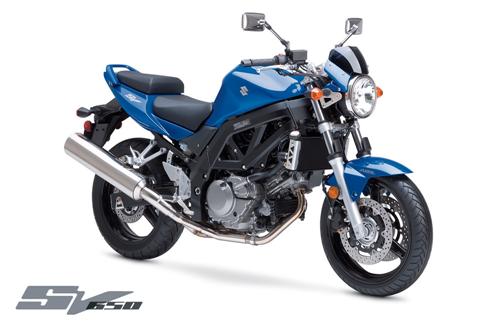
Not my bike, obviously. It served me well, and I liked it quite a bit, but it wasn't quite what I wanted. So later that year, I got a brand new Suzuki DR-Z400SM. Buying new was, again, a stupid idea, but so it goes. I continue to pay for it now.


And that's where I am today. I'm thinking of getting rid of the VFR since most of my riding is in and around the city where the DRZ excels, but that remains to be seen.
Monday, March 14, 2011
iPad 2
Back when the new MacBook Air came out I said to myself that it was exactly what I wanted from a laptop - enough power to view the web, watch movies, and not a whole lot more in the lightest package available. Truth be told, my current MacBook from 2008 still more than meets the first two requirements, and at 4.5 lbs. (according to Wikipedia) isn't too bad in the third (compare to the venerable Lenovo T410 at a bit more than a pound more). I didn't get one since that current MacBook is still under warranty until Thanksgiving, and runs like it was brand new. A bit better, actually, after doubling the system RAM. I got to thinking and realized that an iPad would actually meet my needs almost as well as the MBA while being cheaper. I'd lose a bit on power, but it's still enough to do what I want from it. By that point, I was well past the halfway mark of Apple's product cycle, so I decided to wait it out for the second version.
It was worth it.
I'm not going to bother to explain the differences, since any tech blog out there has done that to death and probably better than I can. I will say that since I bought it on launch day, I haven't touched my laptop. It's become a 4.5 lb. paperweight. Web: check. Music: check. Videos: check. It's there. Except Flash, of course, but since overuse of Flash is one of my biggest pet peeves on the Internet, I'm not really put out by it. (Virtually any web developer can tell you that what people use Flash for can very often be done by other methods that aren't anywhere near as system intensive. The quickly gaining HTML5 standard only improves that.) Granted, I can't play Flash games, but with the rather enormous App Store, of which many apps are free or cheap enough that I don't care, it's barely a concern.
Oh, and about launch day. I spent the morning running some errands, after which I started checking Twitter to see what the line was like. By 2:30, there was 50 or so people for the 5 PM on-sale time. I left home a little after 3 and got there around 3:30, by which time I would estimate that that number had tripled. That said, it wasn't a big deal. About an hour later (by which time the line had almost doubled again), the store's business manager came by and assured us that anyone in line at that point would be able to get one, although she didn't make any promises about which configuration. I wanted the top of the line - 64 GB, black, with Verizon. White looks cheap. All the while, they had people bring hot coffee, cocoa, and cider to anyone who wanted it, which was a godsend on a slightly chilly, windy afternoon. At 5 on the dot, the doors opened, and they started letting people in and they sent out a couple associates to hand out vouchers for the specific units people wanted. By the time they got to me, black AT&T models were gone at both 32 GB and 64 GB capacities. The one I wanted was still available, and I got my voucher. From there, it was another short wait until I got to the front of the line where I got my own associate to help me. He took me to the rack of Smart Covers (I went for black leather), of which they had many, although they were down to the last orange one. It's a shame the poly covers aren't better colors. I would have gladly taken an attractive shade of orange or royal blue (Go Gators!) rather than the Dreamsicle orange and UNC blue colors they were selling. I was given the option to set it up in the store, but I declined, preferring to take it home and deal with it there.
Setup was a breeze, especially since I had my iPhone backup to install to it. My desktop's USB ports even offer enough juice to trickle charge it, which it gets done overnight from around 50% charge, which is convenient. One major problem, though, is some ugly light bleed showing through the screen when it's dark. Looks like it's fairly common, too, so I'm hoping Apple acknowledges it and offers replacements under warranty. It's not as bad as some photos and videos of other units I've seen, but it's enough that my $900 purchase probably shouldn't have it at all. If not, I'll be unhappy, but not too much. All in all, it's a really amazing piece of tech, and as more and more apps are built specifically for it, I can see it become all that much more amazing. As it is, I don't see myself buying a new laptop in the near or even distant future. Not that I wouldn't take a free MacBook Air. (Anyone?)
It was worth it.
I'm not going to bother to explain the differences, since any tech blog out there has done that to death and probably better than I can. I will say that since I bought it on launch day, I haven't touched my laptop. It's become a 4.5 lb. paperweight. Web: check. Music: check. Videos: check. It's there. Except Flash, of course, but since overuse of Flash is one of my biggest pet peeves on the Internet, I'm not really put out by it. (Virtually any web developer can tell you that what people use Flash for can very often be done by other methods that aren't anywhere near as system intensive. The quickly gaining HTML5 standard only improves that.) Granted, I can't play Flash games, but with the rather enormous App Store, of which many apps are free or cheap enough that I don't care, it's barely a concern.
Oh, and about launch day. I spent the morning running some errands, after which I started checking Twitter to see what the line was like. By 2:30, there was 50 or so people for the 5 PM on-sale time. I left home a little after 3 and got there around 3:30, by which time I would estimate that that number had tripled. That said, it wasn't a big deal. About an hour later (by which time the line had almost doubled again), the store's business manager came by and assured us that anyone in line at that point would be able to get one, although she didn't make any promises about which configuration. I wanted the top of the line - 64 GB, black, with Verizon. White looks cheap. All the while, they had people bring hot coffee, cocoa, and cider to anyone who wanted it, which was a godsend on a slightly chilly, windy afternoon. At 5 on the dot, the doors opened, and they started letting people in and they sent out a couple associates to hand out vouchers for the specific units people wanted. By the time they got to me, black AT&T models were gone at both 32 GB and 64 GB capacities. The one I wanted was still available, and I got my voucher. From there, it was another short wait until I got to the front of the line where I got my own associate to help me. He took me to the rack of Smart Covers (I went for black leather), of which they had many, although they were down to the last orange one. It's a shame the poly covers aren't better colors. I would have gladly taken an attractive shade of orange or royal blue (Go Gators!) rather than the Dreamsicle orange and UNC blue colors they were selling. I was given the option to set it up in the store, but I declined, preferring to take it home and deal with it there.
Setup was a breeze, especially since I had my iPhone backup to install to it. My desktop's USB ports even offer enough juice to trickle charge it, which it gets done overnight from around 50% charge, which is convenient. One major problem, though, is some ugly light bleed showing through the screen when it's dark. Looks like it's fairly common, too, so I'm hoping Apple acknowledges it and offers replacements under warranty. It's not as bad as some photos and videos of other units I've seen, but it's enough that my $900 purchase probably shouldn't have it at all. If not, I'll be unhappy, but not too much. All in all, it's a really amazing piece of tech, and as more and more apps are built specifically for it, I can see it become all that much more amazing. As it is, I don't see myself buying a new laptop in the near or even distant future. Not that I wouldn't take a free MacBook Air. (Anyone?)
Back in the game...
I've tried this blogging thing before. At least one time it went for awhile (for certain definitions of "awhile"). Last time...not so much. I'm not sure what going to do with this just yet, but I'm pretty sure it's not going to be solely focused on gaming like the last two attempts (and almost definitely not a personal blog like my long-deleted LiveJournal). I don't think I have the focus to do that. That said, I'm giving myself a goal to write something at least every other day. We'll see.
As for the title - I couldn't think of anything better. Sue me.
As for the title - I couldn't think of anything better. Sue me.
Subscribe to:
Posts (Atom)